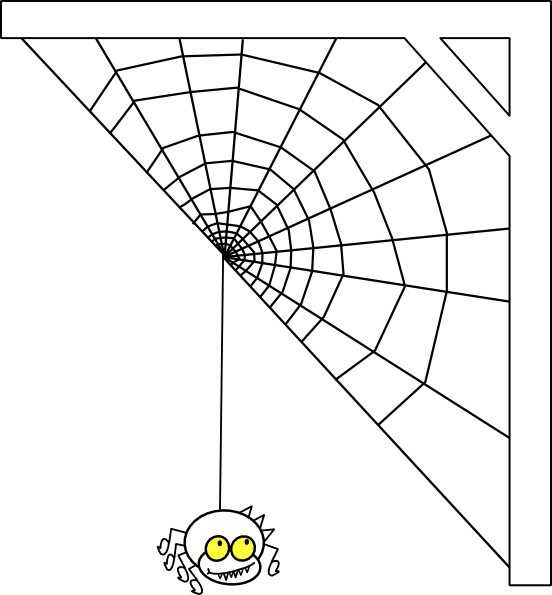
The strong fear of spiders that
many people have makes them a natural part of the Halloween festivities. My children have been noticing decorative
webs all around our neighborhood. How
about yours? This week, we will be
looking for the real life spiders all around us. Now I know that this may not be high on your
to-do list. Believe me, though I can tolerate
and appreciate spiders, I would not be at all happy to have one land on
me. I certainly was very unhappy when
our movers found a black widow in our air hockey table during our recent move
(He actually seemed pretty excited about it).
However, spiders are literally all around us and it is a wonderful gift
to our children to teach them to respect rather than fear these amazing
creatures. One great way to do that is to
appreciate the beauty of the webs that they produce to catch their prey.
The strong fear of spiders that
many people have makes them a natural part of the Halloween festivities. My children have been noticing decorative
webs all around our neighborhood. How
about yours? This week, we will be
looking for the real life spiders all around us. Now I know that this may not be high on your
to-do list. Believe me, though I can tolerate
and appreciate spiders, I would not be at all happy to have one land on
me. I certainly was very unhappy when
our movers found a black widow in our air hockey table during our recent move
(He actually seemed pretty excited about it).
However, spiders are literally all around us and it is a wonderful gift
to our children to teach them to respect rather than fear these amazing
creatures. One great way to do that is to
appreciate the beauty of the webs that they produce to catch their prey.
Parent Background Guide
One of the most feared animals in
the world is also one of its most common.
There are more than 40,000
different kinds of spiders and they live in every climate of the Earth except
for Antarctica. All spiders have 8
legs, breath air, and are venomous. Spiders are born knowing how to spin their webs. Spiders produce the silk thread that they use
to construct their webs and can make the silk thick, thin, dry, sticky, smooth,
or beaded. The webs look delicate, but
at stronger than nylon. They eat by
injecting stomach enzymes into their prey and then sucking out the insides of
the organisms. Spiders do this because their
bodies are too narrow to take in solid nutrition. Spiders have a variety of ways of catching
pray, some spin webs and wait for pray to be caught and other hunt their prey
actively. Spiders typically do not bite
unless they are threated, and our fear of spider bites is greatly exaggerated. In the 20th century only 100
people are known to have died of spider bites (1500 died from Jelly Stings), the
majority of spider bites do not produce even as strong a reaction as that of a mosquito. While the venom of a few species is harmful
to humans, scientists are currently testing spider venoms for use in medicines
and as non-polluting pesticides. Most
types of spiders live alone. Males are
typically smaller than females and must avoid being eaten by the females in
order to survive to mate again. Females
spin an egg case and can lay as many as 100 eggs. In many types of spiders the females care for
the young, either by carrying them or feeding them. Most
spiders live less than two years, but a few species have been reported to live
more than 25 years.
 |
| My little scientists displaying thier preserved webs. |
This week’s activity
Materials The following optional
materials can to find and get a closer look at spider webs.
Spray
bottle of water
Flashlight
for peering into dark spaces.
Discovery time: I know that none of you fabulous ladies (or gentleman) has spider webs in your homes or outdoor spaces as I did so I would suggest going to a public park to look for spider webs. Underneath playground equipment is an easily accessible and very common place to find spider webs within a child line-of-sight. Spritzing webs with water helps to make them more visible. Some of the following questions might stimulate your child to think about what they are seeing: What does the spider web look like? Where do spiders like to build their webs? Did you find any broken webs? How do you think they got broken? Do they look easy to make or like they took a lot of work? Do you think they are pretty (interesting etc)?
Crafty Fun: Preserving Spider Webs
 |
| One of our preserved spider webs. |
It is sometimes difficult for children to see close up and appreciate the pattern of a spider web. With the following technique you can capture and preserve an empty web.
Materials
Talcum Powder (or Cornstarch)
Hairspray
Black or other dark construction paper or cardstock (needs to be sturdy).
Instructions: Find an empty web by delicately tapping on a strand. If the spider is sitting on the web you should see it move. Once you find an unoccupied web, spray it with hairspray. Then have your children dust it all over with talcum powder or cornstarch. Next spray the black paper with the hairspray and gently push the paper through the web. You should have the web perfectly preserved for close examination.
Tying it together: If you have done both activities, your children have gotten the chance to explore spider webs both up close and in nature as well. When you find spiders in your environment ask your children about their webs. If you see spider web decorations around you, ask how they look different from real spiders. Some other fun spider crafts and activities can be found on: http://www.enchantedlearning.com/themes/spiders.shtml.
Fun Facts
· Most spiders have four pairs of eyes.
· Jumping spiders can jump up to 50 times their own length.
· Hummingbirds use the silk from spider webs to weave together sticks for their nests.
· Spiders eat more insects than birds and bats combined.
Extension
Watch Charlotte’s web for some lovely animation on how webs are made as well as some feel good friendship for this most feared of all bugs. The Very Busy Spider by Eric Carle is also a great resource and can be checked out from just about any library.
 Your toddler may or may not be interested in searching for
spider webs because they can be hard for kids this age to see and appreciate. If they aren’t here are a
couple of other ideas to get them started learning about spiders. When researching for this week’s activities,
I found a great new version of Itsy-Bitsy that helps to reinforce the body
parts lessons that we have introduced earlier in the month.
Your toddler may or may not be interested in searching for
spider webs because they can be hard for kids this age to see and appreciate. If they aren’t here are a
couple of other ideas to get them started learning about spiders. When researching for this week’s activities,
I found a great new version of Itsy-Bitsy that helps to reinforce the body
parts lessons that we have introduced earlier in the month. Spider
web craft:
Spider
web craft: