Showing posts with label animals. Show all posts

Friday, January 27, 2012

The Animals Have It All Covered – Classifying Animals by Body Coverings

I used to work in a zoo and one of the things that we really tried to teach children was how to recognize the basic types of animals that they see on a regular basis.  I apologize that this isn’t a fun and flashy experiment, but to my way of thinking it is really important for helping children to understand the world around them.  By being able to group organisms together, children can begin to transfer the things they learned from one animal to other similar animals. I've done the following lesson with large groups, small groups, and my own children.

Today we are going to work on the easiest method for children to classify vertebrate (animals with a spinal cord) animals – by their body coverings.  Children as young as two can learn to tell the difference between mammals, birds and reptiles and that is the goal for this lesson, to make the lesson more fun and engaging it helps to have examples of the body coverings to touch and observe.  For our purposes and for the safety of animals, fake furs and scales are preferred as well as domestic feathers.  Better yet if you would like to see the real thing visit a living history museum, zoo, or nature center.
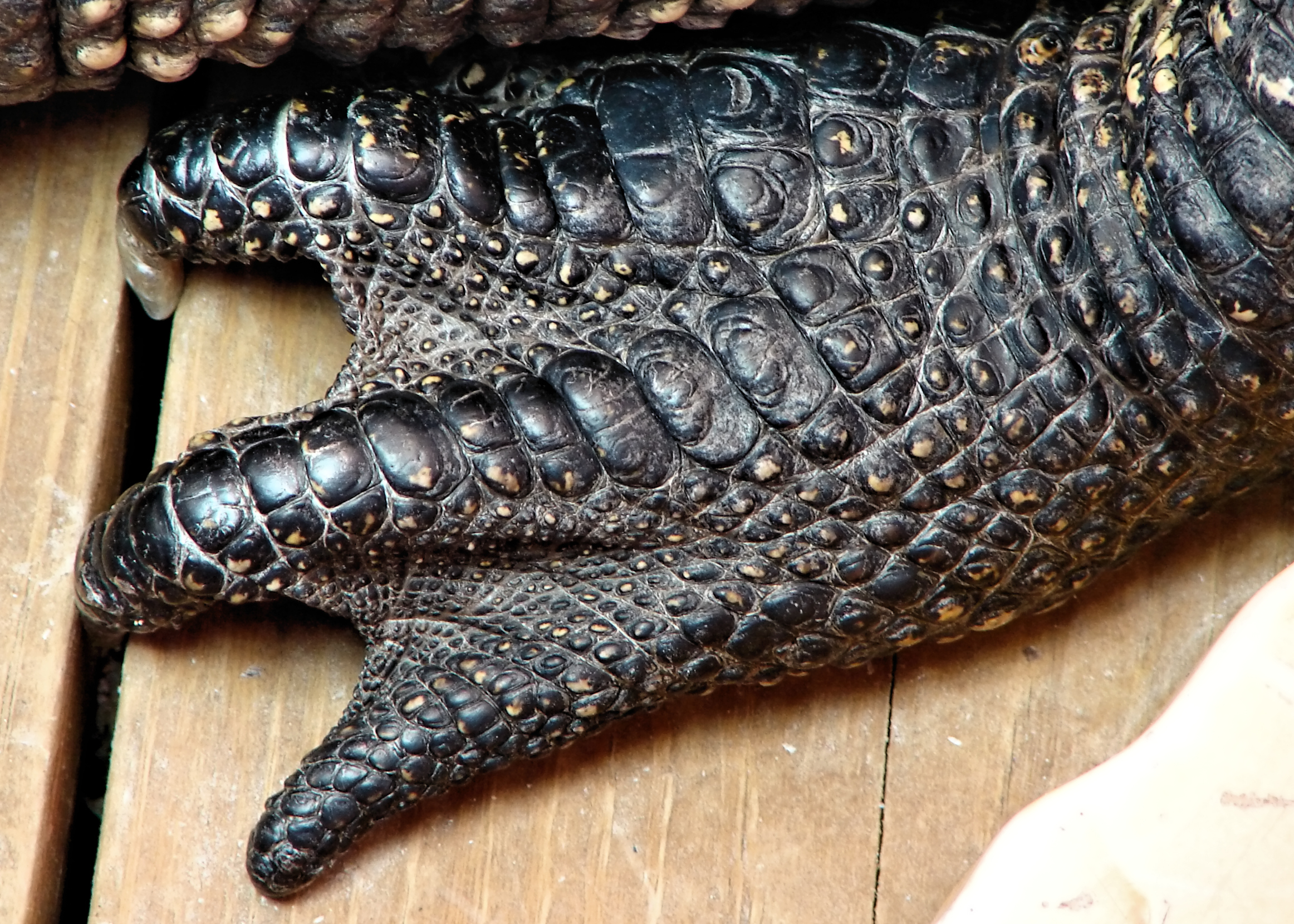
This animal is a reptile because it has scutes. (Alligator)
Photo by Rob from Athens, GA 
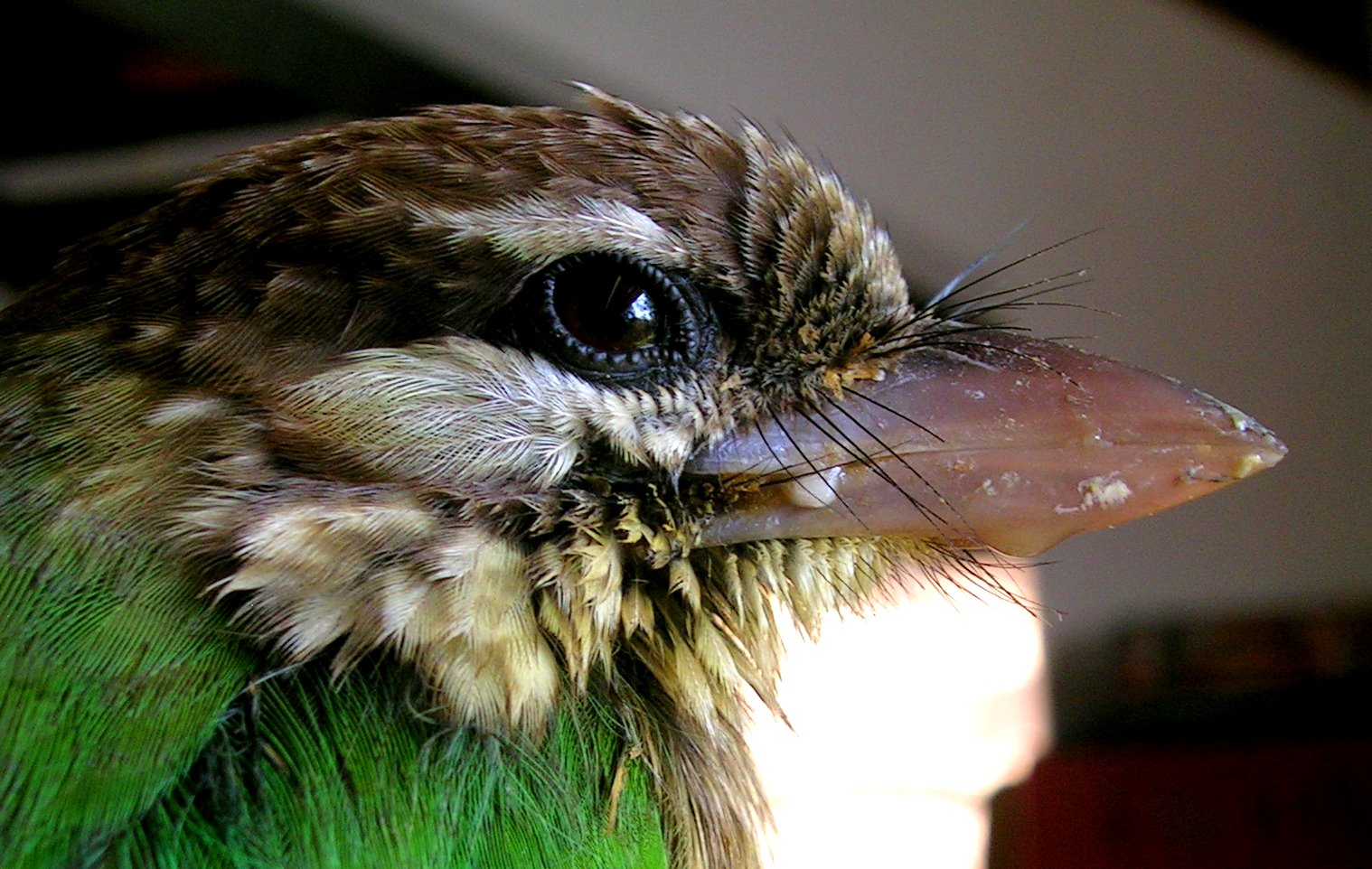
This animal is a bird because it has
feathers (Small Green Barbet) Photo by L. Shyamal


This animal is a mammal because it has hair. 
(Big Eared Townsend Bat.)
Parent Background Guide   Vertebrates (class chordata)  are animals like us.  They are complex, have cells and organs, and have a spinal chord.  The main groups of class chordate are the jawless fishes (lampreys and hagfish), cartilaginous fishes (sharks and rays), bony fishes (all the other ones), amphibians (frogs, salamanders and newts), mammals (animals with fur), birds (animals with feathers), and reptiles (animals with scales or scutes).  Scutes are the boney scales on turtles and crocodilians.   We will be concentration on the 3 land animals in this lesson.  The chart below shows the basics:
This week’s activity
Materials
Realistic toy animals with appropriate body coverings  or
Raid your closet, retail stores, of the local thrift store for items with (preferably fake):
Fur
Feathers
Scales (snake or crocodile skin purse or shoe ??)
A book of animal pictures.

Discovery time: Let your children touch samples of the fur, feathers, and scales.  Ask them to tell you how they feel – bumpy, soft, scratchy, smooth, warm . . . .   This is a great time to  practice using descriptive words.    Have your children contrast how the body covering look different and start practicing the words mammal, bird, and reptile.  Next look at the animal book and let them try to guess which group each appropriate animal fits into.    
Tying it together:  The fun part of this exercise isn’t really during the first teaching lesson, what we loved is looking at books, TV shows, and the zoo and naming each animal as we found it.  Doing this consistently reinforced the ideas for my kids that scales were for reptiles, feathers were for birds, and fur or hair was for mammals.   After we had those things down, we were able to add other facts about each group.  Now whenever, my children see an animal they know something about it even if they don’t know the animals name.  It makes them feel good that they a basic understanding of every animal they see, and makes them want to know even more.  


Friday, January 20, 2012

The Mysterious Couch Potato – Is it an Animal or Plant?

When we our being still and relaxing we call ourselves or our family members “couch potatoes”. But of course people aren’t very much like plants at all, instead we are animals.  In this activity we are going to help children to define the difference between plants and animals.  Having mental classifications for what they see around them helps children to learn more about the natural world.  This week’s  lesson isn’t as active as some.  It is really about observing and chatting with our children about what they see.  Observation and curiosity are really the very most important skills that we can teach our children to encourage them to be scientists.

Parent Background Guide
See the diagram below for the basic characteristics of plants and animals. 


This week’s activity
Materials
Plants vs Animals Worksheet below or https://docs.google.com/open?id=0B81XOd9wgGLVM2ZkNDIyZjEtOWE5MC00MWY5LWJmNzUtZDE5NzljNTZhMDlm
A plant to look at and observe
A living animal to look at and observe

Preparation:   Print the plant and animal comparison worksheet.  I used this first by asking my child to identify the living thing on each line that was different and to tell me why it is different.  This is an open ended thought provoking activity so accept all answers. 

Discovery time: Sit down with your child near both a plant and a living animal.  Ask the following questions giving your children time to answer and discuss what they see: 

Are Plants and Animals the Same?  How do you think they are like each other?  How do they get food?  How do we get more of them?  What if they don’t like where they are sitting anymore – can they move away?

Tying it together:  Pretend Play - One of the best ways to determine if your children understand the differences between plants and animals is to have them act out their knowledge.   I had each of my children pretend to be a plant and an animal.  For the purposes of this experiment, I asked one of them to be a dandelion and the other to be a rabbit.  I asked each one the following questions:

How do you get your food?  (It was fun when the rabbit tried to eat the dandelion.)
What would happen if someone came to eat you??

What happens when you get thirsty??


Friday, October 14, 2011

Going on a Bug Hunt!


Creepy crawlies are all around us all the time, but they are very visible in decorations at this time of year.    Incidentally this is also a wonderful time to look for bugs before they seek warmer homes for the winter.   This activity could take 15 minutes of a few hours depending on how much fun you are having.  I will also include some directions in case you want to bring some temporary “friends” into your house for a couple days of observation in the extension section.  The true goal of this exercise is to encourage your children to explore, to tell you what they find, and to get excited about making observations.  Learning about bugs is a wonderful side-effect.  The ability to get excited about finding animals is the biggest prerequisite of this activity; as such it is great for both preschoolers and toddlers so there will be no toddler Tuesday this week.


A pillbug found under a stepping stone.
A word about this exploration:  Many times parents find bugs to be scary or uncomfortable, but children are born finding them fascinating.  I am thankfully not afraid of bugs, my fear is snakes.  My four year old daughter loves them and I just want to be as far away as possible.  I hope that she has no idea how much I do not like them.  When she asks if I think they are pretty, I tell her that they are amazing creatures, but not my favorite.   As a parent, I think that it is very hard, but important to keep from passing on our discomfort to our children.   I would suggest that if insects make you uncomfortable you make sure to use paintbrushes (and perhaps even garden gloves) as suggested in the materials so that you do not have to touch the bugs.  Also remember that some insects do sting or bite, be cautious about what you let your children pick up but know that most insects in the United States are not aggressive so long as children do not pick them up or touch them (except wasps, fire ants, scorpions, and killer bees which you want to stay away from).

Parent Background Guide   
This week we are focusing on organisms that have external skeletons called exoskeletons rather than the internal skeletons that have been our focus of the last two weeks.  During this exploration you will encounter many different types of animals with your children.  “Bug” is a general term.  More specifically you might find the following types of animals:
Insects – animals with 6 legs including ants, bees, beetles, praying mantis, crickets, butterflies, and an infinitely large variety of other organisms.
Arachnids –animals with 8 legs including Spiders, Scorpions, and Ticks
Crustaceans – Pill Bugs, shrimp, lobsters (easy to find under concrete items like stepping stones and borders).
You are also likely to find Molluscs – slugs and snails that are not considered bugs.

This week’s activity

Materials
All materials are optional as the most important part of this exploration is really a willingness to have fun. 
Paintbrushes to sort through leaves and brush away dirt. (I got 3/$1 at Dollar Tree)
Hand magnifying glasses to get a good look.
A camera to “collect” your finds.
Long pants and bug spray if mosquitos and ticks are still a risk in your area.
Discovery time:   
Today’s activity is really about just going outside and looking around.  The following places are great places to find bugs:  flowers, piles of leaves, on the bark of trees, taller grasses, underneath slides and walkways, yellow components of playgrounds, be sure to look under rocks and stepping stones.  As you are looking at the bugs it is a great opportunity to just follow your child’s lead.  Go at their pace, and help them to look where they would like to look, giving suggestions. Take pictures of their finds and let them tell you what they see. 

Tying it together:   
After coming back into the house, I asked my kids to tell me the favorite thing that they found and the thing that was most surprising to them.  We also talked about the fact that there were a lot of different bugs, and that there were lots and lots of differences.

If you or your children are curious about specific insects the following websites are great for identifying what you have found: 
Bug Guide   http://bugguide.net/node/view/15740
Insect Identification for the Casual Observer  http://www.insectidentification.org/

Fun Facts

A beetle found under leaves.
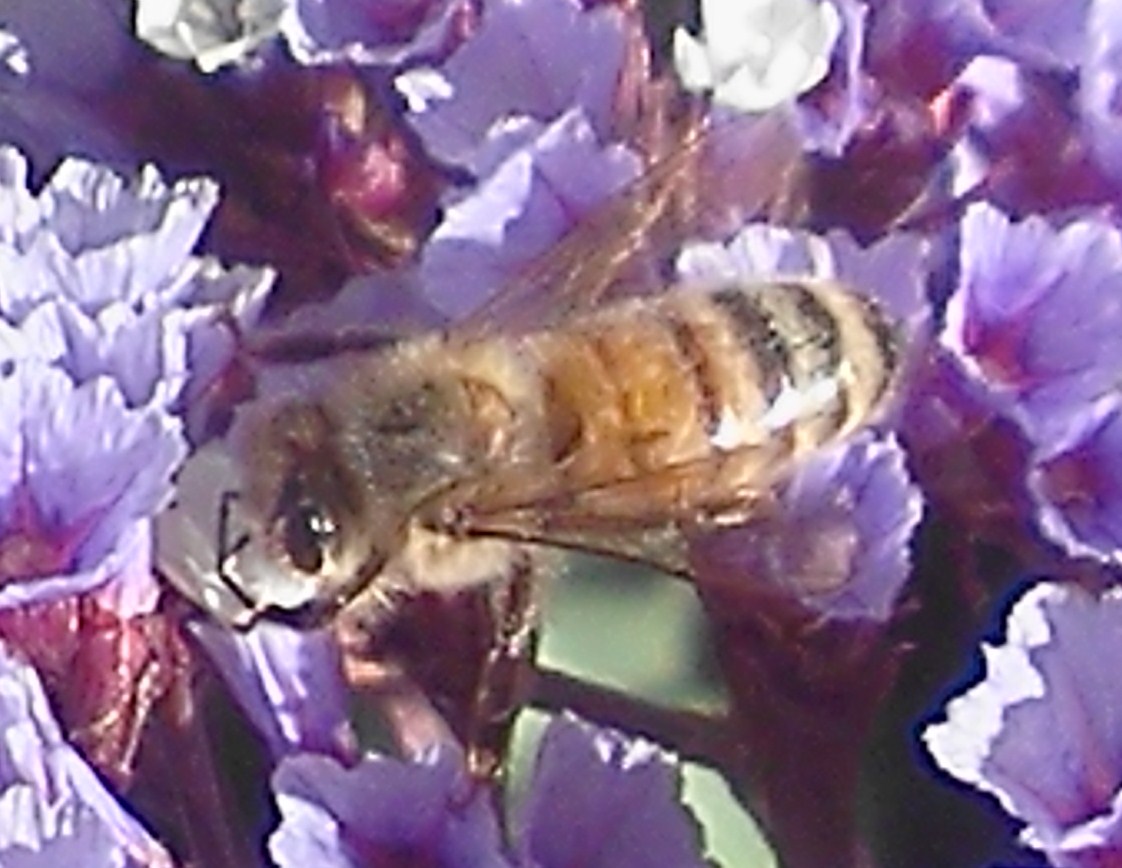
Ø  While gathering food, a bee may fly up to 60 miles in one day.
Ø  Ants can lift and carry more than fifty times their own weight.

Ø  Only female mosquitoes bite human.  Male mosquitoes live on plant juices and decomposing organic material.

Ø  Beetles account for one quarter of all known species of plants and animals. There are more kinds of beetles than all plants.

Extension
Our houseguests!
Rolli Polli Pet –   Armadillidiidae also called Pill Bugs or Rolli-Pollies are very easy to find and to care for in your home.  We are currently entertaining 6 pill bug house guests for the weekend.  Pill bugs do not bite, and will not infest your home.  Care and setup is very simple.  A large glass jar is the perfect home for a pill bug.  Their needs are simple.  Place a layer of moist (not wet) soil in the bottom of the jar.  Also include some small twigs, dead leaves, and if you will be keeping them for a long period of time a small piece of concrete (which they need to eat in small amounts to aid in digestion).   You will want to feed them small amounts of uneaten vegetable matter or dead leaves.  You can give them a variety of different things and your children can see which things they prefer.  Also make sure to mist the jar with water to keep it humid, but not wet.  If you live in a climate that becomes cold, make sure to return your pill bugs to the outside before the ground gets too hard to borough or you can keep them until spring.  Pill bugs can live 2-3 years.  For more information see:  http://www3.northern.edu/natsource/INVERT1/Pillbu1.htm.


Tuesday, October 11, 2011

Toddler Tuesday - My animals have the same parts as me!

Today we are going to use our pets or our toddler's favorite stuffed animals to reinforce the body parts.  Learning body parts is an important goal for toddler self-awareness.  In this short activity we are going to also show them that animals have the same parts as they do helping to build on their natural interest in animals.  This type of activity works best when you only do it once through at a time, but repeat it often.  This is a good time to also practice gentle hands if you are helping your child to point to the body parts on a family pet.
My toddler playing with Linguine (who is an amazingly
sweet and tolerant cat.)
First practice this following song with your toddler:

HERE ARE MY EARS
Here are my ears. (Child points to ears)
Here is my nose. (Child points to nose)
Here are my hands. (Child holds up hands)
Here are my toes. (Child points to toes)

Here are my eyes. (Child points to eyes.)
Both opened wide. (Child opens eyes wide)
Here is my mouth. (Child opens mouth)
With white teeth inside. (Child smiles showing teeth)
 

Once your little one is familiar with the song adapt it for animals (stuffed or real) that you see around you.  For example we have a cat named Linguine so I sing,

Here are kitty’s ears. (Child points to ears)
Here is kitty’s nose. (Child points to nose)
Here are kitty’s legs. (Child holds up hands)
Here are kitty’s toes. (Child points to toes)

Here are kitty’s eyes. (Child points to eyes.)
Both opened wide.
Here kitty’s mouth. (Child points to mouth)
With white teeth inside.

I hope you enjoy this simple and easy to repeat activity.  Next week’s preschooler activity will be hunting for creepy crawlies outside and it is very well suited for all age groups so I will be substituting a book review on Toddler Tuesday instead of an adapted activity, be sure to stop by to see what science books we are reading at our house.  (With shameless promotion of my Usborne site as this month’s book happens to be an Usborne book).  Till Saturday,  keep exploring!


Song from the following great resource for toddler lessons:  http://www.preschoolexpress.com/